
Tart Cherry: Natural Melatonin and Recovery
What the science says about Montmorency tart cherry for sleep quality and exercise recovery — without the hype.
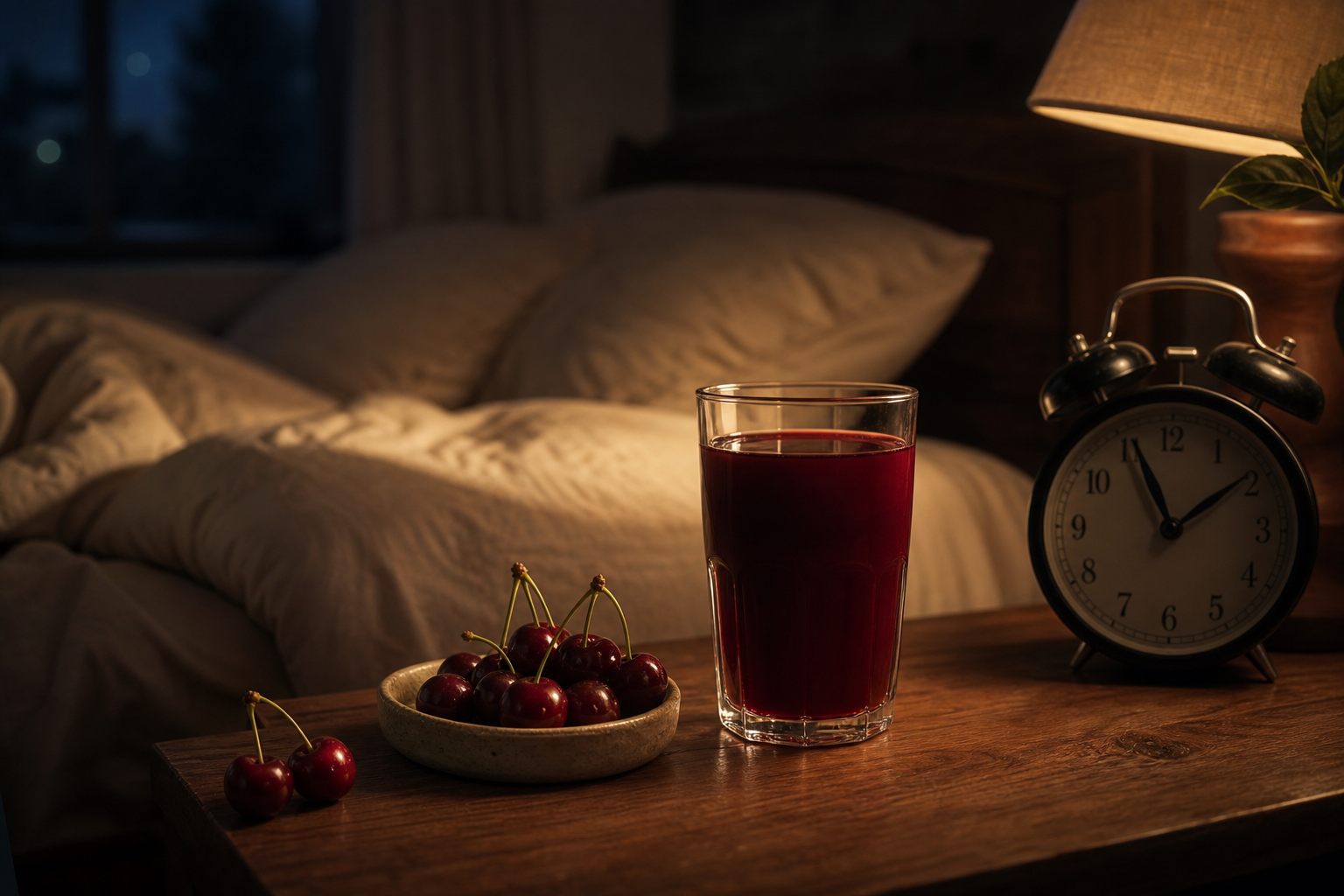
- Tart cherries naturally contain melatonin and polyphenols that may support sleep efficiency and recovery.
- Human studies suggest modest benefits for sleep quality and soreness after hard training.
- Anthocyanins in tart cherries help maintain a healthy inflammatory and antioxidant response to exercise.
- Results vary; dose, timing, and product quality matter, and basics like sleep hygiene still come first.
- Juice, concentrates, and powders are all used in research; check sugar content and choose what fits your routine.
Why tart cherry gets attention: melatonin meets polyphenols
Tart cherries (often Montmorency) bring an unusual combination to the table: they naturally contain melatonin along with dense polyphenols such as anthocyanins. Melatonin is a hormone involved in regulating the sleep–wake cycle, and several edible plants, including cherries, contain small amounts of it [1]. Anthocyanins deliver antioxidant capacity and help maintain a healthy inflammatory response, especially relevant after strenuous exercise [2]. That mix has made tart cherry juice and concentrates popular among athletes and poor sleepers looking for a simple, food-first lever to pull.
To set expectations: the melatonin in tart cherry is modest compared to standalone melatonin supplements, and not all studies show dramatic effects on sleep or recovery. But a body of peer‑reviewed research suggests tart cherry may support sleep efficiency and perceived recovery in certain contexts, particularly when training volume is high or sleep is under pressure [3][4][5]. As with most nutrition strategies, the effect size seems small to moderate and depends on consistent use, product quality, and the bigger picture of your routine.
Sleep support: what the evidence actually shows
Two lines of evidence matter here. First, tart cherries contain measurable melatonin, which could contribute to circadian signaling when consumed in the evening [1]. Second, human trials—mostly small and short—report improvements in sleep quality measures such as sleep efficiency and total sleep time when people drink tart cherry juice or concentrate for 1–2 weeks [3]. These trials often involve older adults or people with sleep complaints, which may partly explain the responsiveness.
In one randomized, placebo‑controlled pilot trial in older adults with insomnia, a tart cherry juice beverage used for two weeks improved several sleep metrics versus placebo, including sleep efficiency and self‑reported sleep quality [3]. The mechanism is likely multifactorial: dietary melatonin itself, plus polyphenols that may influence tryptophan availability or reduce oxidative stress that can accumulate with poor sleep [1][3]. It’s worth underscoring that the benefits observed were modest, and good sleep hygiene—light management, a consistent schedule, and limiting late caffeine—still carries most of the load.
If you already sleep well, effects may be subtle. The research to date doesn’t suggest tart cherry is a “knockout” button; rather, it may help nudge sleep timing and efficiency in the right direction for some people when used consistently and paired with sensible bedtime habits [1][3]. That’s a useful bar to set if you’re trying to decide whether it’s worth experimenting with.
Recovery after hard training: soreness, oxidative stress, and function
The recovery story for tart cherry revolves around anthocyanins and related polyphenols. These compounds may help maintain a healthy inflammatory response and counter exercise‑induced oxidative stress—two processes that ramp up after heavy eccentric or endurance work [2][5]. By supporting these pathways, tart cherry intake has been associated with less perceived soreness and, in some studies, faster return of strength or functional performance after demanding efforts [4][6].
A classic trial in distance runners found that tart cherry juice consumed around a marathon was linked to better self‑reported recovery and lower markers consistent with muscle damage compared with placebo [4]. Another controlled study showed reduced loss of strength and less soreness following an eccentric exercise protocol when participants used a tart cherry juice blend [6]. In cyclists performing repeated high‑intensity bouts across days, tart cherry supplementation was associated with a tempered oxidative stress response, which may help athletes maintain output over multi‑day events or training blocks [5].
To keep this grounded: not every study shows identical benefits, and protocols differ—juice vs. concentrates, duration from a few days to two weeks, and timing relative to exercise. Still, the direction of the evidence suggests tart cherry can be one useful lever to support comfort and function when training is peaking, travel is compressing sleep, or you’re stacking back‑to‑back efforts [4][5][6]. As with sleep, the effect is additive, not magical: hydration, protein, total carbohydrate, and well‑programmed training still determine most of the outcome.
Mechanisms in plain English: why it might work
Melatonin in tart cherry is the simplest mechanism: when consumed consistently, small amounts may contribute to evening melatonin exposure and help reinforce circadian timing cues [1]. Beyond that, tart cherry polyphenols—especially cyanidin‑based anthocyanins—have been shown in vitro to inhibit cyclooxygenase (COX) enzymes and exhibit antioxidant activity [2]. While in‑vitro findings don’t automatically translate to the same magnitude in humans, they provide plausible pathways for how tart cherry might support comfort and function after intense exercise and help you feel more ready for the next session [2][5].
Polyphenols can also influence signaling related to mitochondrial function and redox balance. In multi‑day cycling protocols, tart cherry intake tempered oxidative stress markers, which may reduce the “accumulated fatigue” feeling across consecutive days [5]. For sleep, some researchers suggest tart cherry polyphenols could help maintain tryptophan availability—a precursor to serotonin and melatonin—though this remains a working hypothesis rather than settled fact in humans [1][3]. The bottom line: there are multiple biologically plausible routes that add up to small but meaningful support when the rest of your routine is solid.
How to choose and use tart cherry without overdoing it
Most studies use Montmorency tart cherry as juice, a standardized concentrate diluted in water, or a powder. Concentrates and powders are popular because they’re easier to dose consistently and usually list standardized polyphenol or anthocyanin content. The trade‑off with ready‑to‑drink juice is sugar—useful around workouts, less ideal late at night. If you’re watching calories or blood sugar, concentrates allow you to control dilution and portion size more tightly.
Timing depends on your goal. For sleep support, evening use makes the most sense, aligned with your normal bedtime routine. For training, a short “loading” window before and after a big session is common in studies—think a handful of days rather than months on end [4][6]. Some athletes also use tart cherry during congested competition periods to help maintain day‑to‑day readiness, but consider the big picture: during heavy adaptation phases, you may not want to blunt training signals with high polyphenol loads every single day. Striking a balance is key [5].
Quality varies. Look for products that specify Montmorency tart cherry and provide third‑party testing or standardization for anthocyanins or total polyphenols. If you prefer a lower‑sugar route, consider concentrates or powders without added sweeteners. And if your primary focus is sleep, tart cherry can fit alongside staples like magnesium glycinate and good wind‑down routines; if recovery is your target, don’t neglect electrolytes and protein along with carbohydrate to refuel and rehydrate.
Who it may help most, safety notes, and realistic expectations
People under heavy training loads, those stacking back‑to‑back competition days, and older adults or travelers experiencing occasional sleep disruption may notice the most from tart cherry [3][4][5]. If your sleep is already excellent and your training is moderate, benefits may be subtler. Either way, treat tart cherry as a supporting act, not the headliner—and give any trial at least a full week of consistent use to judge whether it fits your routine.
Tart cherry is generally well‑tolerated as a food‑based option, but a few practical cautions apply. Juice can add a meaningful sugar and calorie load, which may or may not suit your evening routine. Some products contain sorbitol, which can cause digestive discomfort in sensitive people. As with any supplement or concentrated food product, read labels, consider allergies, and check with a healthcare professional if you’re pregnant, nursing, or using medications.
Finally, mind the hierarchy. For sleep, basics like consistent timing, managing light exposure, cooling your bedroom, and limiting late caffeine do more than any single food. For recovery, prioritize adequate total calories, protein, carbohydrate, hydration, and a training plan that match your goals. Tart cherry fits as a straightforward add‑on that may contribute to sleep efficiency and help you feel a bit better between sessions—useful, but not a cure‑all [3][4][5].
FAQ
›Does tart cherry work better as juice, concentrate, or capsules?
Most research uses juice or standardized concentrates. Powders and capsules can work if they deliver equivalent polyphenols. Choose the format you’ll use consistently and check for standardized anthocyanin content.
›When should I take tart cherry for sleep?
Studies often use morning and evening servings, with the evening portion aligned to bedtime. The key is consistency over at least a week. Pair it with solid sleep hygiene for best results.
›Can tart cherry blunt training adaptations?
High, chronic polyphenol loads may theoretically dampen some adaptive signals. Using tart cherry around key events or during congested schedules is common; using it year‑round at high doses is less studied. Balance recovery support with your training goals.
›Is the melatonin in tart cherries enough to matter?
Cherries provide small amounts of melatonin. It likely contributes modestly, especially when used consistently in the evening, but it’s not equivalent to dedicated melatonin supplements.
›Are there side effects?
Tart cherry is generally well‑tolerated. Watch for added sugars, and note that sorbitol in some products can cause digestive upset in sensitive people. As with any concentrated food, check labels and use what fits your needs.
References
- [1]Burkhardt S, Tan DX, Manchester LC, Hardeland R, Reiter RJ. Detection and quantification of melatonin in Montmorency and Balaton tart cherry. J Agric Food Chem. 2001;49(10):4898–4902. Source
- [2]Seeram NP, Momin RA, Nair MG, Bourquin LD. Cyclooxygenase inhibitory and antioxidant cyanidin glycosides in cherries and berries. J Nat Prod. 2001;64(9):1222–1225. Source
- [3]Pigeon WR, Carr M, Gorman C, Perlis ML. Effects of a tart cherry juice beverage on the sleep of older adults with insomnia: a pilot study. J Med Food. 2010;13(3):579–583. Source
- [4]Howatson G, McHugh MP, Hill JA, et al. Influence of tart cherry juice on indices of recovery following marathon running. Scand J Med Sci Sports. 2010;20(6):843–852. Source
- [5]Bell PG, Walshe IH, Davison GW, Stevenson E, Howatson G. Montmorency cherries reduce the oxidative stress response to repeated days high‑intensity stochastic cycling. Nutrients. 2014;6(2):829–843. Source
- [6]Connolly DAJ, McHugh MP, Padilla‑Zakour OI. Efficacy of a tart cherry juice blend in preventing the symptoms of muscle damage. Br J Sports Med. 2006;40(8):679–683. Source
Featured products
Editorially relevant — not paid placements.
Jordan writes about recovery, performance, and the science of feeling good. Former collegiate athlete, now obsessed with the small daily inputs that compound into long-term wellness.
Dr. Natarajan is a board-certified internist with a special interest in evidence-based supplementation and lifestyle medicine. She reviews Vitalytics content for medical accuracy.
Read next
The 5-minute briefing
One short, source-backed email each Sunday on sleep, energy, recovery, and daily wellness.