
Vitamin D and Daily Energy: The Sunshine Connection
Why vitamin D status can make or break how energized you feel

- Low vitamin D is common and may relate to how energetic you feel.
- Vitamin D supports muscle and mitochondrial function—key for all‑day energy.
- D3 with vitamin K2 helps direct calcium to where it’s needed.
- Consistency and absorption basics (with a meal, adequate magnesium) matter.
Why vitamin D shows up in conversations about energy
Vitamin D is best known for helping maintain healthy bones, but its biology extends into tissues that influence how energetic you feel day to day. Skeletal muscle cells carry vitamin D receptors, and vitamin D signaling helps those cells handle calcium and keep their mitochondria—their powerhouses—working efficiently [4]. When mitochondrial function is supported, muscles can use oxygen more effectively and sustain activity with less perceived effort, which tends to show up as better stamina and less mid‑day drag in everyday life [3], [4]. Emerging trials in people with low vitamin D status also report improvements in self‑rated fatigue when levels are brought up, suggesting that status matters for how “switched on” you feel during the day [5]. None of this makes vitamin D a quick fix or a stimulant; it’s more like a background dial for cellular function that you notice most when it’s turned down.
Sunlight is the body’s native source of vitamin D, and that link to the outdoors is one reason people associate vitamin D with natural, steady energy. Ultraviolet B (UVB) rays trigger vitamin D production in the skin, though latitude, season, skin pigmentation, clothing, and sunscreen all influence how much you make [9]. Even with ideal sun, modern indoor lifestyles, high latitudes, and cautious sun practices mean many of us don’t synthesize enough year‑round. That’s where diet and supplements can help maintain healthy levels—without overpromising jolts of energy. The realistic expectation: vitamin D helps support the systems behind endurance and get‑up‑and‑go when you are insufficient, not act like a caffeine replacement [3], [5].
How common is low vitamin D, and why does it matter for energy?
Low vitamin D status is not rare. In a nationally representative U.S. analysis, an estimated 41.6% of adults had serum 25‑hydroxyvitamin D levels below 20 ng/mL, a threshold many researchers consider deficient for overall health [1]. Global surveys echo the theme: wide swaths of the world show insufficient levels, with latitude, air pollution, cultural clothing practices, and limited dietary sources all contributing [2]. When status is low, tissues that rely on vitamin D signaling—including skeletal muscle—may not work at their best. That can translate into day‑to‑day feelings of heavier legs on the stairs, quicker fatigue during chores, or a general sense of reduced vitality in some people, especially if they were starting out deficient [3], [5].
It’s important to keep perspective. Not everyone with low vitamin D reports fatigue, and not everyone who supplements notices a dramatic difference. But the signal is consistent enough to be useful: studies have shown that improving vitamin D status in deficient individuals can support muscle performance metrics and self‑perceived energy, while mechanisms at the cellular level back up those observations [3], [4], [5]. If your baseline is adequate, topping up further may not change how you feel. The practical takeaway is to focus on maintaining healthy status rather than chasing megadoses or quick fixes [8].
The biology behind the “sunshine and stamina” connection
Two core mechanisms tie vitamin D to everyday energy. First, vitamin D influences muscle cell calcium handling and gene expression via the vitamin D receptor (VDR). This contributes to normal muscle contraction and strength, which shows up as easier movement and less perceived exertion in daily tasks [4]. In controlled experiments and imaging studies, correcting low vitamin D status has been associated with improved mitochondrial oxidative capacity in skeletal muscle—essentially, more efficient energy production from oxygen and fuels [3]. Those mitochondrial changes align with reports of lower fatigue in individuals who were previously low [5].
Second, vitamin D helps maintain balanced immune signaling. When immune activation stays in a healthy range, it may reduce the sense of whole‑body heaviness or “slowed” feeling that often accompanies low‑grade inflammatory stressors [4]. While this is an indirect pathway, it’s consistent with how people describe energy: not wired, just steadier. Beyond daytime functioning, there’s an additional angle—sleep. Observational and interventional evidence links adequate vitamin D status with better sleep quality in some groups, and sleep quality is one of the strongest levers for how energized you feel the next day [6]. Again, correlation is not cure‑all, but the pattern supports vitamin D’s steady, background role in how we function.
Sunlight, supplements, and the K2 cofactor: what to know
Nature designed vitamin D to come primarily from UVB exposure. Under mid‑day summer sun, light‑skinned individuals can produce significant amounts quickly, but melanin, sunscreen, clouds, and clothing can dramatically reduce synthesis [9]. For many people—especially at higher latitudes or in winter—food and supplements help maintain status when the sun can’t. Two supplemental forms exist: D2 (ergocalciferol) and D3 (cholecalciferol). D3 is the form found in most over‑the‑counter products and is generally more effective at raising and maintaining 25‑hydroxyvitamin D levels in the blood in head‑to‑head comparisons, which is why it’s the common choice for ongoing maintenance [8].
The K2 connection: directing calcium wisely
Vitamin D increases calcium absorption from the gut, which is great for bone—provided that calcium gets directed to the right places. That’s where vitamin K, particularly the K2 form menaquinone‑7 (MK‑7), comes in. K2 activates proteins like osteocalcin and matrix Gla protein that help guide calcium into bone while helping maintain healthy vascular elasticity—supporting a balanced calcium economy in the body [7]. Several trials show that MK‑7 supplementation improves vitamin K status (lowering undercarboxylated proteins) and supports markers of bone and vascular health, which is why many combination D3+K2 formulas exist [7]. From an energy perspective, this duo doesn’t “amp you up,” but it complements vitamin D’s broader roles by keeping mineral balance on track.
Magnesium matters for vitamin D metabolism
Magnesium is a cofactor for the enzymes that convert vitamin D into its active forms in the liver and kidneys. Low magnesium status can blunt vitamin D metabolism, while adequate magnesium intake may help you get more mileage out of the vitamin D you make from sun or take in from supplements [11]. If your diet is light on magnesium‑rich foods like legumes, nuts, seeds, and leafy greens, being mindful of total magnesium intake can support vitamin D’s benefits. This is one reason products that provide well‑tolerated magnesium forms are popular as companions to vitamin D—again, not as a stimulant, but as background support for normal physiology [11].
What does the evidence say about fatigue and performance?
If you’re hoping vitamin D will transform a sluggish afternoon into superhero hours, it’s worth recalibrating expectations. The clearest benefits show up in people who start with low levels. In a double‑blind randomized trial of individuals with low vitamin D and self‑reported fatigue, those receiving vitamin D3 reported a meaningful reduction in fatigue scores compared with placebo, and the change correlated with rises in 25‑hydroxyvitamin D [5]. Separate studies that corrected deficiency observed improvements in muscle strength and mitochondrial efficiency—changes that fit the narrative of better day‑to‑day stamina [3], [4]. On the other hand, if your vitamin D is already in a healthy range, adding more may not move the needle on how you feel.
Zooming out, reviews of vitamin D and sleep suggest that sufficient vitamin D may contribute to better sleep quality in some populations, which can indirectly support next‑day energy [6]. But sleep is multifactorial, and vitamin D is one piece among many. The strongest throughline across studies: status matters. Keeping vitamin D in a healthy range supports muscle function and cellular energy production, which are prerequisites for sustained daily energy [3], [4], [5]. That’s a slower, steadier kind of support than a quick hit of caffeine, and arguably the kind that lasts.
Practical guidance: getting vitamin D working for you
A few practical points go a long way. Because vitamin D is fat‑soluble, taking it with a meal that includes healthy fats—like olive oil, eggs, or avocado—can improve absorption and lead to higher circulating 25‑hydroxyvitamin D over time [10]. Consistency matters more than clock time; pick a time of day you can stick with. If you spend winters far from the equator, remember that sun angle may limit skin synthesis for months at a time, so diet and supplements do more heavy lifting in those periods [9]. It’s also reasonable to consider vitamin D as part of a basic nutrient toolkit rather than an energy supplement; its job is to support the foundations that make energy possible, not to deliver an immediate jolt [3], [5].
What about how much? Public health guidelines set general intake ranges to help most people maintain healthy blood levels, but individual needs vary with sun exposure, body composition, skin pigmentation, and age [8]. Many off‑the‑shelf products provide a broad spread of amounts; check your product label and work with a qualified healthcare professional for testing and individualized guidance if you need it. If you choose a combination with vitamin K2 (often MK‑7), you’re choosing a strategy that supports healthy calcium handling alongside vitamin D’s absorption effect [7]. And if your diet is light on magnesium, shoring up that mineral may help vitamin D metabolism function smoothly [11].
D2 vs. D3, and small habits that add up
If you’re comparing labels, D3 (cholecalciferol) tends to raise and maintain 25(OH)D more effectively than D2 (ergocalciferol) in most contexts, which is why D3 is the default in many products [8]. Whichever form you choose, pairing with food and taking it regularly are the unglamorous habits that make the difference [10]. If you’re adding K2 as MK‑7, know that its role is about protein activation for calcium balance—not energy per se—so think of it as complementary infrastructure [7]. And as with any nutrient, more is not always better; the goal is a healthy range, not an arms race [8].

FAQ
›Will vitamin D give me an immediate energy boost?
No. Vitamin D supports muscle and mitochondrial function over time, especially if you were low to begin with. It doesn’t act like a stimulant [3], [5].
›Is D3 better than D2 for everyday maintenance?
D3 (cholecalciferol) is generally more effective at raising and maintaining 25(OH)D levels, which is why it’s common in maintenance products [8].
›Do I need vitamin K2 with vitamin D?
K2 (MK‑7) activates proteins that help guide calcium to bone and support vascular elasticity, complementing vitamin D’s role in calcium absorption [7]. It doesn’t increase “energy,” but it supports balanced mineral handling.
›Can I rely on sunlight alone for vitamin D?
It depends on season, latitude, skin pigmentation, time outdoors, and sunscreen use. Many people need dietary or supplemental vitamin D during parts of the year [9].
›Any tips to help vitamin D work better?
Take it consistently with food containing some fat, and ensure adequate magnesium intake to support vitamin D metabolism [10], [11].
References
- [1]Forrest KY, Stuhldreher WL. Prevalence and correlates of vitamin D deficiency in US adults. Nutr Res. 2011;31(1):48-54. Source
- [2]Hilger J, Friedel A, Herr R, et al. A systematic review of vitamin D status in populations worldwide. Br J Nutr. 2014;111(1):23-45. Source
- [3]Sinha A, Hollingsworth KG, Ball S, Cheetham T. Improving the vitamin D status of vitamin D deficient adults is associated with improved mitochondrial oxidative function in skeletal muscle. J Clin Endocrinol Metab. 2013;98(12):E1907-E1915. Source
- [4]Girgis CM, Clifton-Bligh RJ, Hamrick MW, Holick MF, Gunton JE. The roles of vitamin D in skeletal muscle: Form to function. Am J Physiol Cell Physiol. 2015;308(11):C1041-C1050. Source
- [5]Nowak A, Boesch L, Andres E, et al. Effect of vitamin D3 on self-perceived fatigue: A double-blind randomized placebo-controlled trial. Nutr J. 2016;15:116. Source
- [6]Muscogiuri G, Barrea L, Scannapieco M, et al. The lullaby of the sun: The role of vitamin D in sleep disturbance. Sleep Med Rev. 2019;44:51-61. Source
- [7]Knapen MHJ, Drummen NEA, Smit E, et al. Three-year low-dose menaquinone-7 supplementation helps decrease bone loss in healthy postmenopausal women. Osteoporos Int. 2013;24(9):2499-2507; and effects on vitamin K–dependent proteins: Thromb Haemost. 2015;113(5):1135-1144. Source
- [8]Ross AC, Taylor CL, Yaktine AL, Del Valle HB, eds. Dietary Reference Intakes for Calcium and Vitamin D. Institute of Medicine (US); 2011. Source
- [9]Holick MF. Vitamin D deficiency. N Engl J Med. 2007;357(3):266-281. Source
- [10]Mulligan GB, Licata A. Taking vitamin D with the largest meal improves absorption and results in higher serum 25-hydroxyvitamin D. J Bone Miner Res. 2010;25(4):928-930. Source
- [11]Uwitonze AM, Razzaque MS. Role of Magnesium in Vitamin D Activation and Function. Nutrients. 2018;10(9):E1365. Source
Featured products
Editorially relevant — not paid placements.
Jordan writes about recovery, performance, and the science of feeling good. Former collegiate athlete, now obsessed with the small daily inputs that compound into long-term wellness.
Dr. Natarajan is a board-certified internist with a special interest in evidence-based supplementation and lifestyle medicine. She reviews Vitalytics content for medical accuracy.
Recommended for magnesium support
Third-party tested. No fillers. Cancel anytime.
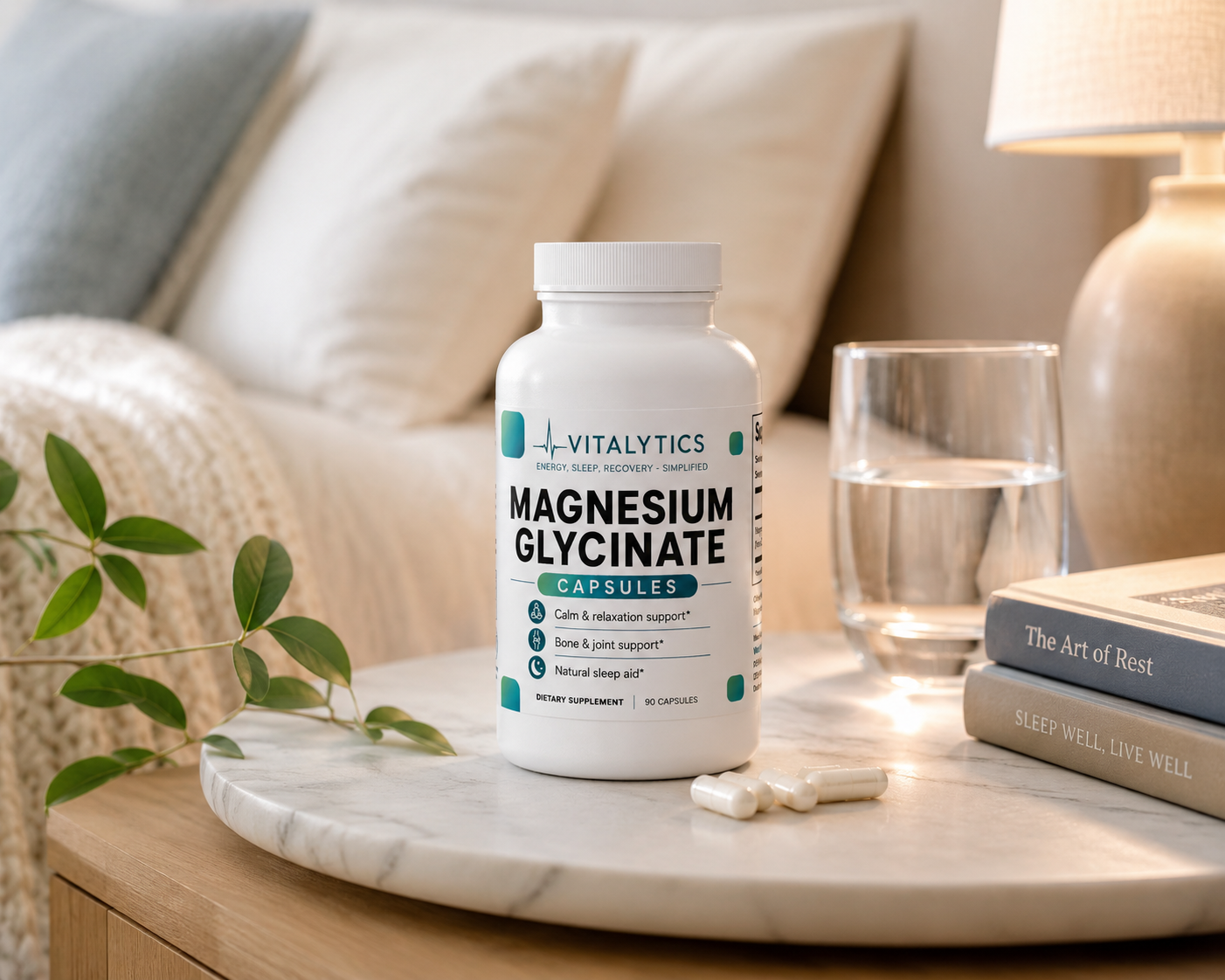
Supports muscle relaxation and nighttime routines.
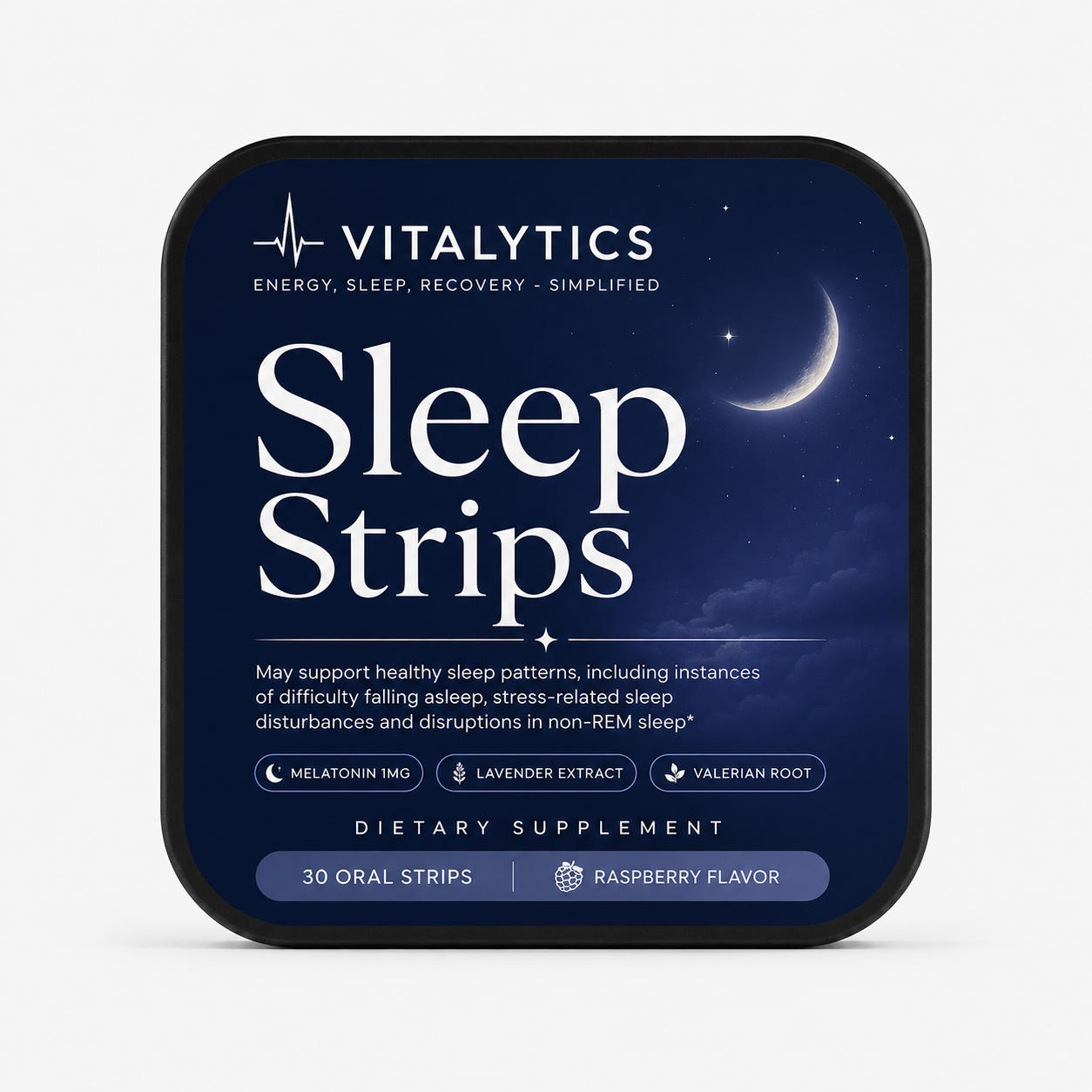
Supports your nighttime routine.
Editorial picks — not paid placements. Statements have not been evaluated by the FDA. This product is not intended to diagnose, treat, cure, or prevent any disease.
Read next



The 5-minute briefing
One short, source-backed email each Sunday on sleep, energy, recovery, and daily wellness.